Building a Better Future for First Nations Families, Together
Learn about Canada's plan submitted to the Canadian Human Rights Tribunal for the long-term reform of the First Nations Child and Family Services Program.
PDF Version (1.53 MB, 8 page)
On this page
A message from The Honourable Mandy Gull-Masty, Minister of Indigenous Services Canada
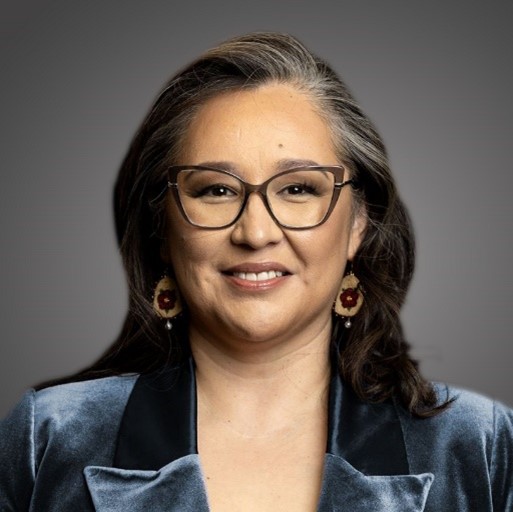
"Too many of our children are being taken from their homes and grow up in care, causing generational pain and lasting trauma. This is not just a statistic; it is the lived reality of families. We need to work together – governments, communities, organizations, and families – to change this reality, and advance First Nations-led, community-driven solutions that prioritize family preservation and healing.
Canada has begun working with regional First Nations entities to negotiate regional agreements on the long-term reform of the First Nations Child and Family Services Program. These negotiations reflect the plan Canada has submitted to the Canadian Human Rights Tribunal in December 2025, which emphasizes the need for a comprehensive process that respects the regional realities, perspectives and rights of all First Nations.
Negotiations will establish First Nations-led regional agreements across the country, within a national programmatic and funding framework, and will focus on addressing regional differences within a national reform context. Regional First Nations entities will be able to negotiate agreements that will ensure children are safely connected to their families, cultures, and communities. Regional agreements are being supported with a financial commitment of $35.5 billion over seven years, beginning in April 2027, and lasting until March 2034, followed by $4.4 billion annually ongoing after that. During these negotiations, there will be no interruption to services – Canada will continue to deliver and fund child and family services on a national level.
This work remains urgent and will continue to be a top priority in the coming months. I believe that building a better future begins with our children. We know that when First Nations lead, outcomes improve. It is our responsibility to showcase to all First Nations children that they matter – and we will not stop until we get this right."
The Honourable Mandy Gull-Masty, P.C., M.P.
Minister of Indigenous Services
The value of negotiating regional agreements with Canada and the strength of the national framework
Regional agreements will offer First Nations a powerful opportunity to shape the future of child and family services in ways that reflect their own priorities and governance structures. Negotiating a regional agreement will ensure that reforms reflect the unique needs, values, and aspirations of First Nations within each region. A regional negotiation will shape implementation of a reformed program in a manner that is further responsive to a region's goals and needs.
The strength of the national framework
Even without a regional agreement, the national framework will ensure that core reforms underpinned by guiding principles—including substantive equality, cultural safety, and the inherent right of self government—will be implemented across the country. The national framework guarantees:
- A research-driven, prevention-first, evidence-based funding approach
- Equal treatment for First Nations exercising jurisdiction under An Act respecting First Nations, Inuit and Métis children, youth and families or other mechanisms
- National standards for data, outcomes, and planning
However, negotiation of regional agreements will focus on the implementation of these core reforms, and adjustments that will further enhance the national framework's ability to reflect each region's unique context.
How regional agreements will enable regional diversity
1. Regional governance and decision-making power
Regional agreements will give First Nations meaningful authority over how the reformed FNCFS Program is implemented. Governance is central: there will be many decisions to be made in implementation and First Nations should be at the table overseeing those decisions. Through regional governance bodies, First Nations will be able to inform program operations, guide reform implementation, and influence future funding decisions.
2. Control over program assessments and indicators
Regional governance tables will play a decisive role in defining the scope of program assessments and overseeing the organizations that will conduct them. That oversight will ensure that assessment reflects regional realities and priorities.
Regional negotiations will also be an opportunity to define region-specific indicators that capture data crucial to achieving better outcomes for a region's children and families. What gets measured, gets managed; region-specific indicators—supported by a regional data secretariat—can directly influence service delivery and outcomes.
3. Strengthening data sovereignty
Regional agreements will support the creation of regional data secretariats that advance First Nations‑led data governance. Data secretariats that are established by and report to a region's First Nations entity promote First Nations control over community data and can reveal region-specific insights to improve practice and policy in the delivery of child and family services.
4. Building readiness for jurisdiction
Regional agreements are a tool for transformation toward self‑government. They will allow First Nations to design and deliver child and family services, strengthening readiness for the resumption of jurisdiction. They will also emphasize and enable leadership by First Nations through strengthening accountability of FNCFS agencies to the communities they serve.
The importance of culture, identity, and language
Regional agreements will take us toward a future where First Nations children and families have access to fair, culturally grounded, community-led services. They will support First Nations in exercising their right to care for their own children—by strengthening prevention-focused services, supporting families, and enabling communities to design and deliver programs rooted in their own laws, cultures, languages, and in line with their priorities.
At the heart of this work is the understanding that culture, identity, and language are not supports—they are foundations. When children are connected to their language, their land, and their people, they are stronger, healthier, and more resilient.
First Nations across Canada have consistently and urgently called to be the decision-makers for their children and have made it clear that meaningful FNCFS Program reform can no longer wait.
Together, in true partnership—grounded in respect, trust, and a shared responsibility—we will build a system with First Nations where fewer children are placed in care, more families stay together, and more children are raised surrounded by love, culture, and their community.
This means supporting families earlier, keeping children in their communities whenever possible, and ensuring that services reflect the values and traditions of each Nation. It means shifting from a system of apprehension to one of prevention, healing, and reconnection.
Regional agreements will set a path that prioritizes community-driven, community-controlled solutions that reflect the unique needs of First Nations across the country.
It is also a path toward restoring what was taken—revitalizing languages, strengthening identity, and ensuring that future generations of First Nations children grow up grounded in who they are, surrounded by their families, and supported by their Nations.
Key features of the national framework
The national framework dedicates $35.5 billion from April 1, 2027, to March 31, 2034 (including funding for Ontario), and $4.4 billion annually ongoing after that. An agreement on the FNCFS Program reform would account for a region's proportional share of that total national amount.
Regional agreements under the national framework will seek to put First Nations in control and at the forefront of delivering child and family services to their communities. Among other things, negotiations toward a regional agreement would cover:
- the allocation of funding for First Nations and FNCFS agencies
- the accountability framework for FNCFS agencies to the First Nations that they served
- the governance mechanism by which First Nations would advise ISC on implementation of the reformed FNCFS Program
- the scope and timing of program assessments
- region-specific indicators and region-specific entities for collecting and analyzing child and family services data
- principles, purposes and definitions
- planning, performance measurement and reporting
Funding would be provided using a highly flexible funding mechanism allowing for carryover of unexpended funding at year end, the reallocation of funding between funding elements, and the transfer of funding between First Nations and their affiliated FNCFS agencies.
Prevention
In 2027-2028, funding for prevention services or activities would be set at $2,762.90 multiplied by a First Nation's registered First Nations population on-reserve or in the Yukon. A First Nation will be provided with a minimum of $75,000 in cases where the calculated amount by population would otherwise be less.
Prevention funding would be adjusted annually for population and inflation. Where applicable, funds will also be adjusted to account for remoteness.
The allocation of the prevention funding between First Nations and FNCFS agencies will be discussed as part of negotiations.
A First Nation may bring a service provider funding adjustment request if it is unable within its current funding, for reasons beyond its reasonable control, to deliver prevention services under the reformed FNCFS Program.
Baseline funding
Under the national framework, each FNCFS agency will receive annual baseline funding based on the agency's 2022-23 operations and maintenance expenditures, including claims for maintenance, intake and investigations, legal fees, building repairs, child service purchase, and small agency costs.
Baseline funding will include funding for least disruptive measures, which seek to prevent the separation of children from their families and to reunify children with their families.
Where an FNCFS agency was unable to deliver legislated services or least disruptive measures within its current funding for reasons beyond its reasonable control, the agency could submit a service provider funding adjustment request.
Top-ups, adjustments and supports
Emergency:
- Equal to 2% of annual baseline funding
- Support with responding to unexpected situations affecting or related to the provision of the program
Information technology:
- Equal to 6% of annual baseline funding
- Support with IT needs, funding can be used for the purchase, installation and maintenance of IT hardware, software, or subscriptions
Results:
- Equal to 5% of annual funding baseline
- Support with collecting and analyzing data and measuring performance
Household supports:
- Calculated based on the "poverty gap" on reserve determined by the Institute of Fiscal Studies and Democracy
- Intended to mitigate poverty-related circumstances that may result in a family being involved in the child welfare system
First Nation Representative Services
First Nation representatives will support First Nations in having a voice when children and families from their communities are involved, or at risk of involvement, with child and family services. First Nation representatives will also ensure the rights and cultural needs of First Nations children, youth and families are upheld.
Under the national framework, starting April 1, 2027, First Nation Representative Services funding outside Ontario would be calculated based on First Nation Representative Services funding provided to First Nations in Ontario. This enhancement to the Final Agreement's reform framework represents an additional investment of $406 million beyond the 2024 Final Agreement, from 2027-28 to 2033-34.
Post-Majority Support Services
First Nations youth and young adults eligible for FNCFS funded post-majority support services include youth aging out of care and young adults formerly in care who:
- were ordinarily resident on reserve or in the Yukon at the time they were taken into care, regardless of where they were placed in care
- are now ordinarily resident on reserve or in the Yukon
- are taking active steps to reside on reserve or in the Yukon
Youth and young adults remain eligible until their 26th birthday or the age to which post-majority support services are offered in the region's child and family services legislation.
Funding will support First Nations youth and young adults in the transition to adulthood and independence. Funding will be based on cost-of-living estimates to allow for provision of comprehensive supports to First Nations youth and young adults.
Remoteness
The national framework's remoteness adjustment funding will reflect the increased costs of delivering child and family services in remote First Nations.
The Remoteness Quotient Adjustment Factor, developed by Nishnawbe Aski Nation and Canada, will apply to funding for:
- prevention
- First Nation Representative Services
- post-majority support services
- household supports
- information technology
- results
- emergency
Funding will be adjusted for a First Nation or its affiliated FNCFS Agency where the First Nation's 2021 Index of Remoteness score is 0.40 or greater. Funding will be adjusted by nearly 30% on average across the country to account for remoteness.
Each individual First Nation's adjustment will depend on its 2021 Index of Remoteness score (which is based on a community's proximity to population centres) and whether the First Nation is connected by road to the main road network.
Capital
The national framework's approach to capital funding supports greater stability and security to FNCFS service providers in planning for the delivery of FNCFS services in alignment with community goals. Capital funding will support service delivery for the reformed program, including:
- needs assessments and feasibility studies
- the purchase and construction of capital assets
- the repair and renovation of existing buildings
- the lifecycle costs of owned assets
Under a regional agreement, capital funding will be provided to First Nations and to FNCFS agencies through an annual proposal-based intake process to request funding for capital assets. This proposal process would be simplified and streamlined for accessing funding.
Housing
The primary goal of these funds will be to prevent children and youth from being placed in care and to support reunification of families where housing is a barrier.
The total amount of housing funding to which an individual First Nation is entitled is determined by a formula that combines:
- the First Nation's on-reserve and in the Yukon, population count from the Indian Registration System
- the First Nation's 2021 Index of Remoteness score
- the Census 2021 percentage of the First Nation's population living in overcrowded dwellings
- a $250,000 base amount
These funds can be used to support the purchase, construction, renovations, major/minor repairs, lot servicing, and sub-division development in their First Nations communities.
Canada has committed $2 billion over 5 years starting in 2023-24. Each region will receive its remaining share of that funding for its final year in 2027-28.
Engagement
Funding is available to support the negotiation of regional agreements and for engagement of a region's First Nations on such an agreement.
Building a Better Future for First Nations Families, Together Booklet (PDF)
Contact us
For more information on Canada's plan submitted to the Canadian Human Rights Tribunal, and negotiations for regional agreements:
First Nations Children and Families Program and Partnerships Branch
Indigenous Services Canada
10 rue Wellington 22nd floor
Gatineau QC K1A 0H4
Email: InfoRLT-LTRInfo@sac-isc.gc.ca
Related links
- Negotiations for regional agreements to advance long-term reform of First Nations child and family services
- Canadian Human Rights Tribunal: Settlement agreement and long-term reform
- First Nations Child and Family Services Program
- Timeline: Jordan's Principle and First Nations child and family services